
From Cameron
Hey folks!
Yesterday was the 25th anniversary of the day my father died, aged 52, which means he’s been dead for nearly half the amount of time he was alive and he’s been dead for nearly half of my life which is a strange thing to contemplate. Somebody asked me if I miss him and I said I don’t, but I would like to have another conversation with him now that I’m nearly 56. I think I understand him better than I did when I was 30. People sometimes ask me – if I had a Time Machine who would I go back and talk to? And my answer is always the same – my father.
Yesterday was also Shostakovich’s 120th birthday. My week has been largely involved with being obsessed with Shostakovich’s Symphony #7, the “Leningrad”. I’ve also been watching a 2016 BBC documentary about the Leningrad première. It’s been called “a legendary moment in Soviet political and military history” and for good reason.
Why the hell would you try to put on a concert when people are dying of starvation and a city is under siege?
Surely “art” could take a back seat during the most brutal siege in history. I’d put “finding food” and “survive the brutal winter” much higher on my list of important things. But it served two important purposes. I’ll get to that in a minute. Let me give some context.
If you don’t know anything about the symphony, here’s the quick version. In 1941, Germany invaded the Soviet Union during the opening stages of Operation Barbarossa and laid siege to Leningrad, now Saint Petersburg, and blockaded the city. It lasted 872 days, and an estimated 1.5 million people died out of a population of about three million, many of them from starvation.
Leningrad was Shostakovich’s home town. He and his family were there during the early months of the siege, and he started composing the Seventh Symphony while the city was under attack. He was eventually evacuated and finished it elsewhere in the Soviet Union.
In August 1942, the symphony was performed in Leningrad for the first time. It’s a crazy story. Karl Eliasberg, the only conductor left in the city, summoned the players of his Leningrad Radio Orchestra, only fifteen out of the usual forty members were still available; the others had either starved to death or left to fight the enemy. Eliasberg himself had spent the last few months in hospital recovering from extreme exhaustion and dystrophy caused by malnourishment.
Now, this symphony is massive. It’s designed to be incredibly loud and terrifying, and it needs a huge orchestra of 100 players to perform it properly. So Eliasberg had to find more musicians, literally going door to door to find as many as he could, only to discover many of them suffering from malnutrition. Some were too weak even to rehearse. Others fainted during rehearsals. He used them anyway.
Why bother under these circumstances?
The performance was pertly intended to bolster the morale of the people in Leningrad. As one of the surviving audience members told the documentary in 2016: “There was a sense of pride. Damn you! We have an orchestra, and we’re at the Philharmonic Hall! We were surrounded by Germans, they were shelling us, but there was this feeling of superiority.”
And it was also used as psychological warfare against the German forces surrounding the city. Radio Leningrad set up speakers to broadcast the performance to the German front. “We’re still alive and you haven’t crushed our spirit.” (The message was NOT, as Tony suggested on QAV this week, “end the siege now, or we’ll play his first six symphonies as well!” Geeeez…..)
After the war, German PoWs supposedly told the Soviets that after hearing the performance many of them had the feeling that they were going to lose the war.
The stories in the documentary by people who lived through the siege are horrifying. Family, friends and neighbours dropping dead around you, mothers having to decide which of their children to murder to feed the others, etc. I’m pretty sure Ray wouldn’t have to think very hard in that situation.
Anyway… This week I’m listening to Shosta’s 10th symphony, the one he composed after Stalin died in 1953.
My Thought For The Day
“Each of us needs what nature gives us, when nature gives it.”
Marcus Aurelius
Our TikTok of the Week
@tpnhistory Which country is biggest? France or China? france macron coldwar #historytime
♬ original sound – Cam & Ray TPN History – Cam & Ray TPN History
This Week’s Episodes
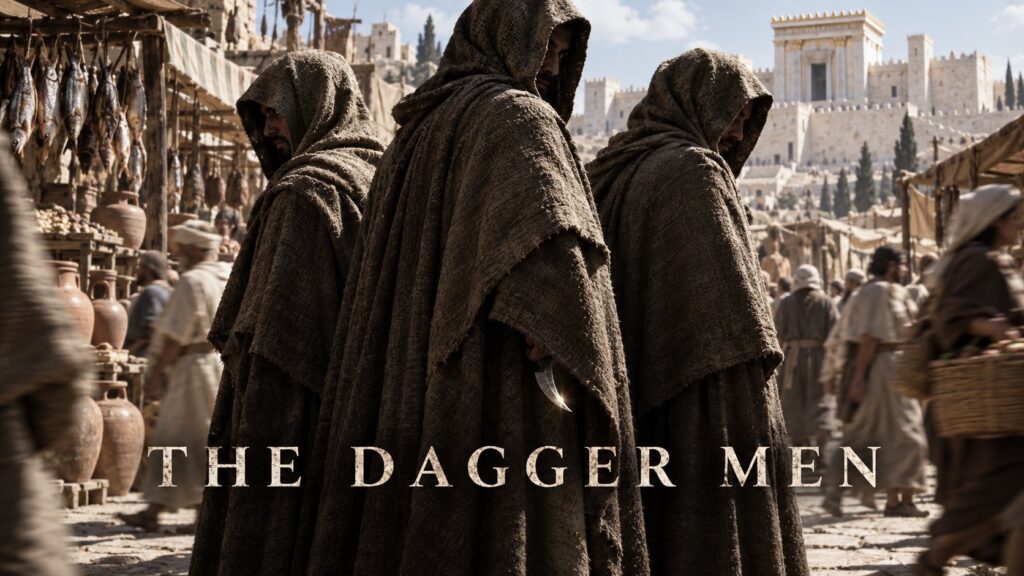 |
Life of Caesar · Published 28 September 2026 The Dagger Men – Vespasian #28This episode we’re deep into Josephus on the Sicarii, the original cloak-and-dagger assassination squad – literally, they hid curved daggers under their cloaks – who spent the Jewish-Roman War killing other Jews for not being Jewish enough…. according to Josephus, who is of course completely unbiased. We also end up somewhere unexpected: how Jewish civil war, Jew-on-Jew violence, and the trauma of a civilisation being flattened might explain rather a lot about where Christianity came from. |
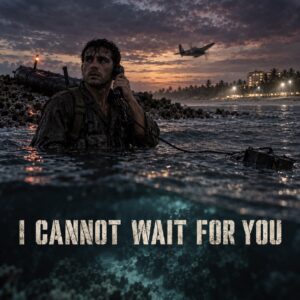 |
Cold War · Published 16 September 2026 Cold War 316: “I Cannot Wait For You”The CIA’s master plan for the Bay of Pigs invasion was, apparently, a cakewalk. The frogmen hit the coral reef they thought was seaweed, a light shorted out and alerted the shore, the winches on the landing boats squeaked loud enough to wake the neighbourhood, and Castro’s planes showed up at first light exactly as promised. By day three, the brigade commander’s final radio message was “I cannot wait for you”…. which is also, roughly, what Washington was thinking. |
 |
Renaissance · Published 18 September 2026 Werewolves Lost Again – The Renaissance #246We’ve finally made it to witch trials…. sort of. First: an 80-year-old man in 1692 Livonia confessing to being a werewolf, werewolves who apparently lose battles against sorcerers armed with broomsticks, and a fertility cult called the Benandanti who leave their bodies in the shape of butterflies to fight for good crops using fennel stalks. Then the Waldensians, who just wanted to preach poverty and got 700 years of massacre for it. And then the witch trials of 1430s Switzerland… |
 |
The Bullshit Filter · Published 22 September 2026 The Grand Chessboard: Who’s Really Running Europe? – BS Filter #151Today we pick apart Brzezinski’s Grand Chessboard – episode three of our miniseries – and cut through 30 years of NATO spin to see whose agenda is actually running Europe. If you would like to listen to the full episode, sign up and become a supporter of the show! It’s less than the cost of a single coffee a week. The post The Grand Chessboard: Who’s Really Running Europe? – BS Filter #151 appeared first on The BS Filter . |
 |
Futuristic · Published 12 September 2026 Futuristic #47 – Will Humanoid Robots Save Australia’s Economy Before AI Wrecks ItToday we get into whether humanoid robots will fill Australia’s labour gaps before AI hollows out white-collar work, and why the answer to both questions is probably “sooner than the regulators are ready for.” |
 |
QAV Australia · Published 23 September 2026 Our is Not to Reason Why: QAV AU #948 |
 |
QAV America · Published 24 September 2026 You Can’t Stop The Fruiterer: Village Supermarket: QAV America #71 |